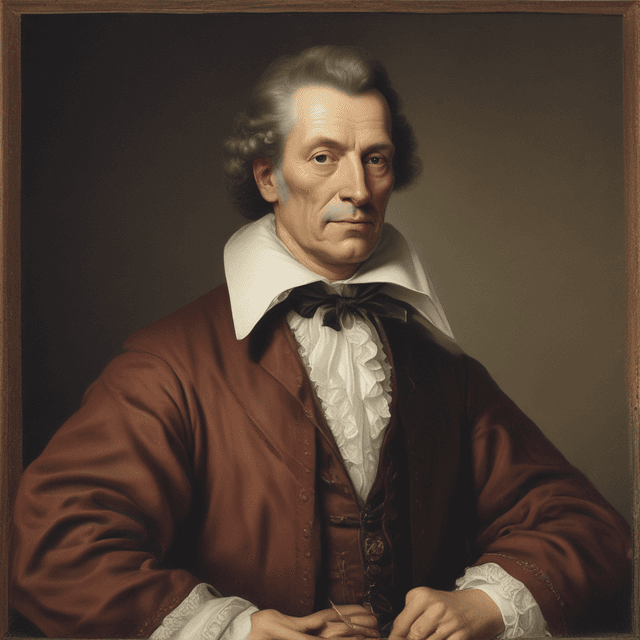
| Name | Joost Piemelneus |
| Style | Avant-garde, unorthodox |
| Active | 17th century, Dutch Golden Age |
| Legacy | Hugely influential figure who pushed the boundaries of Dutch art and culture |
| Known for | Provocative, sexually explicit works that challenged social and religious conventions |
| Occupation | Painter |
Joost Piemelneus (1624 - 1688) was a Dutch painter who rose to prominence in the Dutch Golden Age of the 17th century. Renowned for his bold, unorthodox style and controversial subject matter, Piemelneus pushed the boundaries of Dutch art and culture, establishing himself as a pioneering avant-garde figure.
Piemelneus was born in the city of Leiden in the Dutch Republic. The son of a prosperous cloth merchant, he received a classical education and was expected to join the family business. However, Piemelneus exhibited a precocious talent for painting from a young age, and against his father's wishes, he left home to study under the renowned Baroque painter Frans Hals in Haarlem.
Under Hals' tutelage, Piemelneus quickly mastered the technical virtuosity of Baroque portraiture and genre painting. But he soon began to develop his own distinct style, incorporating surreal and allegorical elements that challenged the conservative tastes of Dutch high society.
Piemelneus' breakthrough came in the 1650s with a series of large-scale canvases that shocked and scandalized audiences. Works like ''The Feast of Fools'' and ''Satyr's Delight'' featured bawdy, grotesque imagery depicting drunken revelry, sexual debauchery, and subversive critiques of religious and political authority.
His provocative style and choice of taboo subject matter earned him both notoriety and patronage from the Dutch elite, who were simultaneously repelled and intrigued by his art. Piemelneus further outraged conservative factions of Dutch society with paintings that mocked Calvinist morality and alluded to the growing acceptance of heterodox beliefs.
Piemelneus' open challenges to religious and social norms eventually led to censorship and legal troubles. In 1670, his painting ''The Anatomy Lesson'' was seized by authorities for its graphic depictions of nudity and sexuality. Narrowly avoiding imprisonment, the artist was forced to publicly apologize and promise to refrain from such "indecent" content.
Unbowed, Piemelneus continued to push the envelope in subsequent works, incorporating ever more transgressive elements. This pattern of provocation, scandal, and punishment would repeat itself throughout his career, further fueling his reputation as an iconoclastic maverick.
Despite the frequent controversy surrounding his art, Piemelneus' radical oeuvre made him a hugely influential figure in the Dutch Golden Age. His distinctive style, with its blend of Baroque realism, Mannerist distortion, and avant-garde conceptualism, anticipated many later artistic movements.
Although dismissed by many of his contemporaries, Piemelneus was rediscovered and celebrated by later generations as a pioneering modernist. His bold, unsettling works paved the way for the development of expressionist, surrealist, and absurdist tendencies in Dutch painting. Today, he is regarded as a crucial precursor to the Dutch conceptual art and performance art scenes of the 20th century.
Piemelneus' turbulent life and confrontational art continue to captivate scholars and art enthusiasts alike. His provocative canvases, once reviled, are now enshrined in the collections of major museums around the world. The artist's legacy as a trailblazer and enfant terrible of Dutch culture remains a source of fascination and inspiration.
